



All News >> Digital Newsletters
Everyone’s Talking Dyed Diesel. Here’s What You Need to Know.
October 9, 2026
Written By Adam Buckallew
If you’ve been hearing a lot about red-dyed diesel lately, you’re not alone. The fuel is in the spotlight after President Donald Trump signed an executive order at a political rally allowing its use on public highways.
The temporary policy is an effort from the Trump Administrations to combat record-high diesel prices, which peaked at $6.53 per gallon nationally in late September according to AAA.
The rising price of diesel fuel has put pressure on farmers, truckers and large swaths of the economy that rely on the fuel to transport goods. The high prices have also prompted several state governors to take emergency actions in the last two weeks.
There are a lot of questions about what the changes mean and how they could affect diesel purchases. Here’s a quick look at what you need to know.
What is dyed diesel?
Dyed diesel is diesel fuel that has been marked with red dye to distinguish it from fuel intended for on-road use.
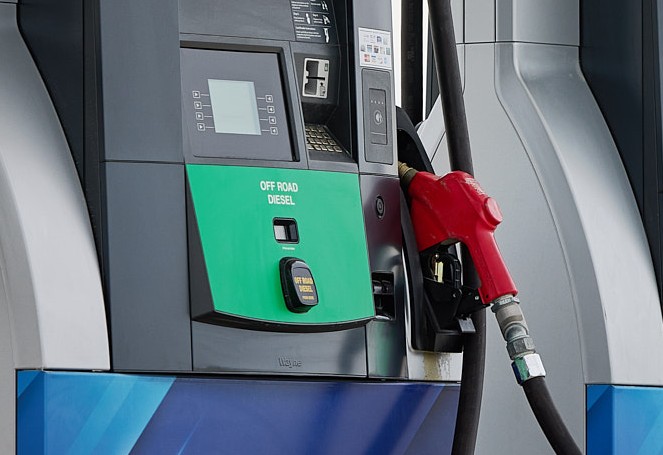
Chemically, the diesel is virtually identical to the clear diesel fuel sold at truck stops and gas stations. It’s colored red because it’s meant to be used and taxed differently.
Usually, red-dyed diesel is intended for off-road vehicles such as farm and construction equipment, generators and other off-road applications. Because it is generally sold without the federal excise tax and certain state taxes, there are restrictions on where and how it can be used.
That’s where things get more complicated.
The red dye makes it easier for regulators and law enforcement to identify fuel that is intended for tax-exempt use.
Under normal circumstances, using dyed diesel in a highway vehicle can result in federal and state taxes, penalties and other enforcement actions.
The IRS penalty for unauthorized dyed diesel use is a fine of $1,000 or $10 per gallon, whichever is more expensive. Many states impose their own matching or stacking penalties, back taxes, vehicle impoundments, or commercial driver’s license (CDL) consequences.
What did President Trump’s executive order do?
On Oct. 5, President Donald Trump signed an executive order titled “Emergency Tax Relief on Diesel Fuel” in response to elevated diesel prices and supply concerns.
The order directs the U.S. Department of the Treasury to provide conditional federal excise tax deferral and specified penalty relief for highway sales and use of dyed diesel from October 5 through December 31, 2026.
Importantly, the Executive Order itself does not authorize highway sales or on-highway use of dyed diesel fuel. Whether relief is available, whom it covers, and on what conditions depend on the Treasury determinations and guidance that have yet to be issued. In some instances, state action may also be necessary.
The order gave Treasury five days, or until Oct. 10, to make those determinations and issue guidance.
That guidance is important because it will identify:
- What specific relief is available
- Who qualifies for the relief
- Which transactions and uses are covered
- What conditions apply
- When the relief begins and ends
- When any deferred taxes would have to be paid
It’s a tax deferral, not forgiveness
The executive order does not eliminate the federal diesel tax, it simply postpones the payment to Jan. 1, 2027.
The federal excise tax on diesel is 24.4 cents per gallon. Under the order, Treasury is directed to defer certain tax payments for qualifying taxpayers on fuel used from Oct. 5 through Dec. 31, 2026.
The order says the deferred amounts would be subject to relief from penalties and interest to the extent permitted by law.
It also directs Treasury to explore ways to eliminate the obligation to pay the deferred taxes. But the Executive Branch cannot unilaterally eliminate taxes without Congressional approval. In other words, Congress would need to pass a bill approving the tax waiver, and it would then need to be signed into law by the President.
While off-road red-dyed diesel usually isn’t taxed, farmers who use it for on-road purposes are still required to track usage and pay taxes on it. Although states and the federal government won’t fine farmers for not paying taxes at the point of use, these orders assert that the tax obligations remain when off-road diesel is used on public roads.
What else does the executive order do?
The executive order directs several federal agencies to help make the policy work.
The U.S. Department of Agriculture is directed to work with agricultural cooperatives, rural fuel distributors, farm supply organizations and other agricultural stakeholders to help ensure adequate supplies of dyed diesel in high-demand areas.
The Department of Transportation is directed to coordinate with states, industry and labor organizations regarding access to dyed diesel while continuing federal highway safety and compliance enforcement.
The White House Office of Intergovernmental Affairs is also directed to encourage states to adopt policies that correspond with the federal action.
Important questions remain unresolved
Because the executive order requires additional action by Treasury and the IRS, anyone considering buying red diesel fuel for on-road use is advised to wait until all the rules and regulations are fully spelled out.
State fuel taxes, licensing and reporting requirements, and dyed-fuel prohibitions also continue to apply unless a state acts. States, including Alabama, Arkansas, Indiana, Louisiana, Missouri, Nebraska, North Carolina, North Dakota, Oklahoma and Texas, have issued emergency relief. These state orders vary, and many are limited to agricultural vehicles, state highways, or short time periods.
The federal order also does not eliminate existing Environmental Protection Agency fuel requirements. According to Energy Marketers of America, dyed fuel used on the highway must still meet applicable 15 parts-per-million ultra-low-sulfur diesel requirements, and the executive order does not itself grant an EPA waiver.
What are states in the MFA Oil trade territory doing?
Several states have temporarily relaxed certain restrictions, but eligibility, effective dates and covered activities vary. The table below outlines temporary highway-use measures and documentation needed for agricultural sales tax exemptions.
| State | Temporary highway-use measure | Agricultural exemption documentation |
| Missouri | 30-day relief beginning Sept. 30 for qualifying agricultural vehicles. | Missouri Department of Revenue Form 149. |
| Oklahoma | 120-day temporary enforcement relief beginning Sept. 28 for qualifying agricultural operations. | Active Oklahoma Agricultural Exemption Permit. |
| Arkansas | 30-day relief beginning Sept. 28 for qualifying agricultural and forestry operations. | Arkansas does not require an exemption form or card for purchases of dyed diesel. |
| Kansas | None. Gov. Laura Kelly said changes to the state’s red dye diesel laws are unlikely. | Kansas Agricultural Exemption Certificate. |
| Iowa | Certain state penalties suspended Oct. 6 through Feb. 2, 2027, for qualifying agricultural transportation. | Iowa Sales/Use/Excise Tax Exemption Certificate. |
PLEASE NOTE: Agricultural sales tax exemptions and temporary permission to use dyed diesel on public highways are separate matters. Having an exemption certificate does not, by itself, authorize highway use.
What does this mean for farmers?
For eligible agricultural operations, temporary relief may provide additional fueling flexibility while diesel prices remain elevated. However, you should confirm that your vehicle, activity, fuel and travel route qualify under applicable federal and state rules before using dyed diesel on a public road, particularly when crossing state lines.
How do I claim agricultural tax exemptions on MFA Oil purchases?
Provide MFA Oil with the agricultural exemption documentation required for your state so it can be applied to your account.
For qualifying bulk fuel deliveries, applicable exemptions will be applied when the necessary documentation is on file. At Petro-Card 24 locations, you must use a Petro-Card 24 fuel card so eligible purchases can be identified and applicable state or local sales tax exemptions applied.
Contact your local MFA Oil office if you need assistance with exemption documentation or your account.
MFA Oil increases Petro-Card 24 purchase limit
To help members and customers manage higher diesel prices, MFA Oil has temporarily increased the single-purchase limit for Petro-Card 24 fuel cards from $999 to $2,000.
What should you do before using dyed diesel on public roads?
Because temporary measures are subject to change and may have specific eligibility requirements, you should review current federal and state guidance before purchasing or using dyed diesel for highway travel.
- Verify applicable state rules and the dates relief is in effect.
- Keep receipts and records of fuel purchases and use.
- Retain documentation of qualifying agricultural transportation activities.
- Consult a tax professional or the appropriate regulatory agency about eligibility, tax obligations and reporting requirements.